
Carbon monoxide (CO) is a serious indoor air quality hazard because it is colorless, odorless, and tasteless. Without a functioning CO alarm, homeowners have no reliable way to detect dangerous levels accumulating inside the home.
For Salt Lake City residents, the risk is highest during winter, when furnaces operate continuously and homes remain sealed for extended periods. Understanding the warning signs and maintaining your heating system properly are essential steps toward protecting your household.
What Causes Carbon Monoxide in Your Home?
CO forms when fuel-burning appliances do not achieve complete combustion. Natural gas, propane, oil, wood, and gasoline can all produce CO when combustion is incomplete or ventilation is inadequate. In homes with gas furnaces, common causes include cracked heat exchangers, blocked flue pipes, damaged venting, and poor combustion.
Additional sources include water heaters, fireplaces, wood stoves, and portable generators. Even a vehicle left running in an attached garage can quickly introduce CO into living areas. During winter storms, snow or debris blocking exhaust vents is a more common issue than many homeowners realize.
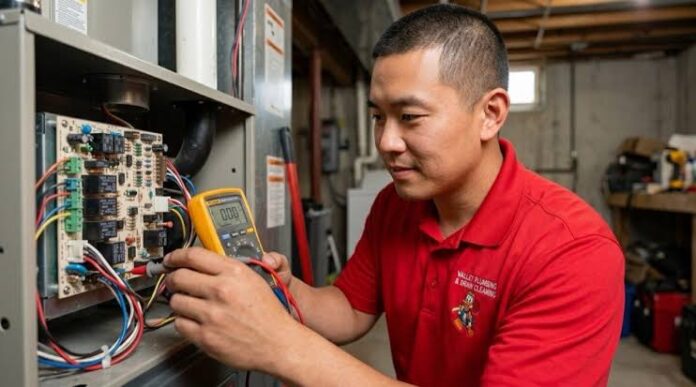
This is why regular furnace maintenance and timely furnace repair in Salt Lake City, UT, are critical. A heating system operating under heavy demand throughout a long winter requires clean combustion, unobstructed ventilation, and annual professional inspection.
Recognizing Carbon Monoxide Poisoning Symptoms
CO poisoning symptoms are often mistaken for the flu, which makes early detection difficult. Be alert for the following warning signs:
- Headaches and dizziness
- Nausea or vomiting
- Unusual fatigue or weakness
- Confusion or difficulty concentrating
- Chest tightness or shortness of breath
Also, symptoms that ease when you leave the home and return once you are back inside are one of the most reliable indicators that CO, rather than ordinary illness, is the cause.
Prolonged exposure can lead to loss of consciousness and can be fatal. Children, elderly adults, pregnant women, and people with heart or lung conditions are at higher risk. If multiple household members experience symptoms simultaneously, especially while the heating system is operating, take the situation seriously.
How to Prevent Carbon Monoxide Exposure
Several practical measures can significantly reduce the risk of CO exposure.
- Install CO alarms: Install one on every floor and outside each sleeping area. Test them monthly and replace them when they reach the end of their service life.
- Schedule annual furnace inspections: A trained technician will check combustion, cracked or compromised heat exchangers, flue connections, and exhaust venting for anything that could turn into a problem.
- Clear your outdoor vents after storms: Snow and ice can block furnace intake and exhaust openings. Check them after heavy weather following the manufacturer’s guidelines.
- Operate generators outdoors only: Keep portable generators at least 20 feet from the home with the exhaust directed away from windows, doors, and vents.
- Avoid makeshift heat sources: Gas ovens, charcoal grills, and camp stoves are never safe for indoor heating.
If your furnace begins making unusual noises, struggles to maintain temperature, or cycles on and off repeatedly, have it inspected promptly. Timely furnace repair in Salt Lake City, UT, can identify minor issues before they escalate into major safety or performance problems.
What Should You Do If a CO Alarm Sounds?
Evacuate everyone immediately, including pets. Do not stop to collect belongings or search for the source. Once outside, call 911 and wait for emergency responders to confirm the building is safe before anyone re-enters. If anyone is experiencing symptoms, seek emergency medical attention immediately.
Before restarting the heating system, arrange for a qualified technician to inspect all fuel-burning appliances. If a malfunction is suspected, schedule furnace repair in Salt Lake City, UT, before operating the system again.
Concluding Thoughts
Reducing carbon monoxide risk requires functioning alarms, properly maintained equipment, and seasonal awareness. Keep vents clear, operate appliances according to manufacturer instructions, and address warning signs from your heating system promptly. Schedule furnace repair in Salt Lake City, UT, at the first sign of a problem, and make annual furnace maintenance part of your winter preparation. These steps are straightforward, but they are essential for maintaining a safer home during colder months.