
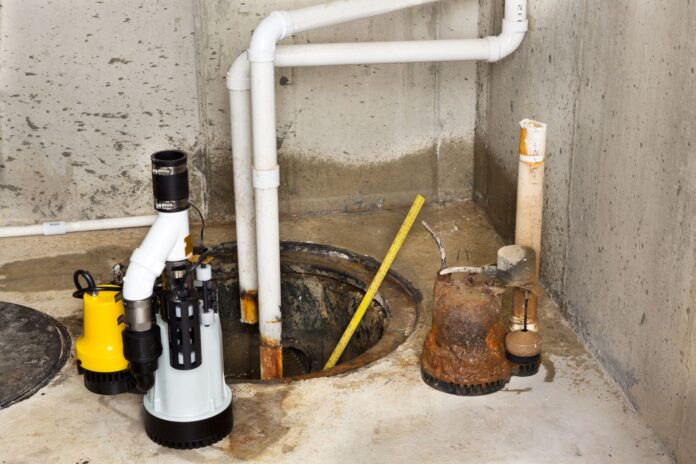
A sump pump diverts groundwater away from your basement foundation, preventing potential damage to floors, walls, and the structural foundation. However, a standard electric pump is reliant on household power and must be fully operational to function effectively.
In Cedar Rapids, heavy rainfall and spring snowmelt can rapidly direct significant water volume toward a home’s foundation. Therefore, the decision to add a battery backup system depends on your property’s water history, the reliability of your local power grid, and your tolerance for risk.
How a Standard Sump Pump Protects Your Basement
A standard sump pump is installed within a basin excavated below the basement floor. As water accumulates in the basin, a float switch activates the pump, which then discharges the water through a line to a safe location away from the foundation. A correctly sized and well-maintained pump effectively manages consistent groundwater seepage and mitigates the risk of basement flooding.
For properties with minimal water intrusion and a reliable power supply, a standard pump is often sufficient. However, a malfunctioning float switch, a clogged discharge line, motor failure, or a power outage can render the system inoperable, allowing the basin to fill without draining. For homeowners not yet ready to invest in a full backup system, a high-water alarm offers a lower-cost partial answer. It alerts you when basin levels rise abnormally, giving you time to act before flooding occurs.
What a Battery Backup Adds
A battery backup system provides auxiliary power when the primary pump is unable to operate. In the event of a power outage or primary pump failure, a separately powered backup unit activates automatically as water levels rise in the basin.
It is important to note that battery backup systems have operational limitations. Most battery backup units deliver a runtime of roughly 5 to 7 hours under moderate load, though this figure varies by pump capacity and battery size. Confirm the specific runtime with your installer before purchasing. The backup system’s flow rate and operational duration are contingent upon the pump’s capacity and the battery’s charge level. High demand depletes the battery more rapidly than under normal conditions.
Battery maintenance is an ongoing responsibility that homeowners often overlook. Backup batteries require periodic testing, and most sealed lead-acid units need replacement every three to five years. A battery that has never been serviced is a common reason backup systems fail precisely when they are needed most. Therefore, the battery, charger, alarm, and entire system require regular inspection. Correct installation and proper fit within the sump basin are also critical for the backup system’s performance.
An alternative worth noting for homes on a municipal water supply is a water-powered backup pump. Rather than relying on a battery, it uses municipal water pressure to drive the pump, eliminating battery maintenance and runtime limitations. The tradeoff is increased water consumption during operation and dependence on consistent municipal pressure. It is not suitable for well-watered homes.
When Should Cedar Rapids Homeowners Consider a Backup?
A backup system is a prudent investment if your primary pump cycles frequently, your basement has a history of water intrusion, or you store valuables or have finished living space in the lower level. A backup is also advisable if you travel and cannot monitor the system, if you operate a home office in the basement, or if your area is prone to power outages during severe rainstorms.
Observe the rate at which water enters the basin during a heavy storm. If the basin fills rapidly, the backup pump must have sufficient capacity to match the inflow rate. A battery system cannot guarantee a dry basement during a prolonged power outage or an extreme rainfall event, but it significantly reduces the risk of flooding when the primary pump fails.
Choosing the Right Setup for Your Home
Before scheduling a sump pump installation in Cedar Rapids, IA, evaluate your basement’s water history, the existing drainage configuration, pump capacity, and the typical workload of the system. A professional site assessment can determine whether a standard pump is sufficient or if a battery backup is a necessary addition.
Battery backup systems generally cost more upfront than a standard pump installation, and that gap widens when you factor in periodic battery replacement. A high-water alarm sits at the lower end of the cost range and may be a reasonable starting point for homes with low intrusion history. Inquire about the backup pump’s flow rate, its realistic battery runtime under load, the included alarm systems, and the required maintenance schedule. Battery runtime varies based on demand and pump cycle frequency; therefore, a single runtime figure does not provide a complete picture. If your area experiences prolonged power outages, inquire whether a generator connection or a water-powered backup is a more suitable solution. Ensure discharge lines remain clear and are directed away from the foundation.
Professional sump pump installation in Cedar Rapids, IA, ensures both units are properly sized, correctly positioned, and thoroughly tested in advance of the next storm.
Bottom Line
A standard sump pump is effective for homes with low to moderate groundwater levels and a reliable power source. A battery backup provides a critical layer of protection when the primary pump loses power or fails, which is particularly important for homes with recurring moisture issues, high pump activity, or finished basement space. A water-powered backup is worth considering for municipal-water homes that want to avoid battery upkeep entirely. The optimal choice depends on your home’s specific conditions and your risk tolerance. Consulting with a qualified professional about sump pump installation in Cedar Rapids, IA, will help you evaluate your options and implement a proactive plan before severe weather occurs.